
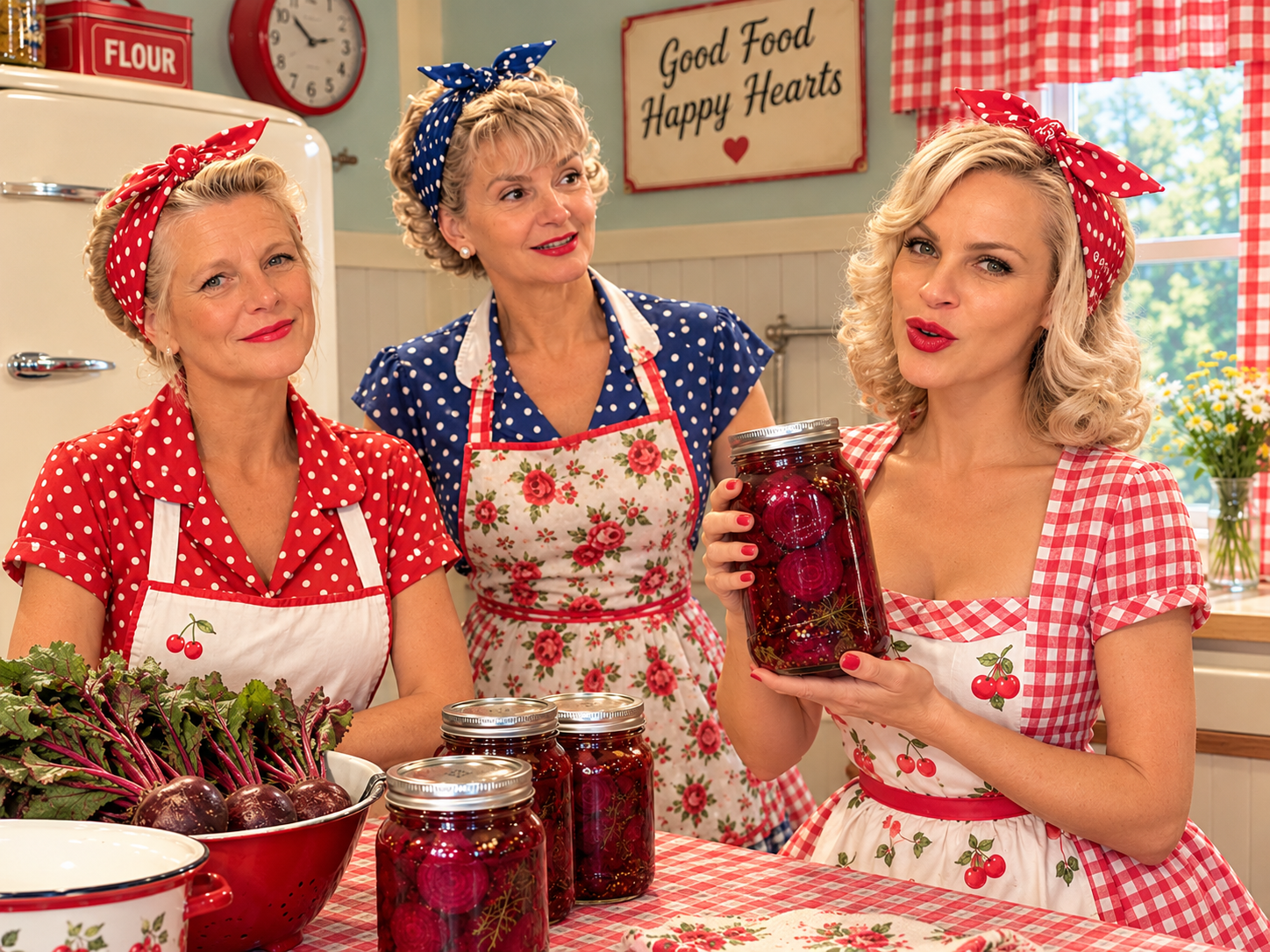
I hear it all the time.
“I wish things were like the good old days.”
“I wish we could go back to a simpler time, when people weren’t so divided, when food was real, when neighbours knew each other, and when life didn’t feel so toxic and crazy.”
I get it. I really do. It seems like everywhere we turn there is another thing to worry about. The news, the economy, the food supply, our health, the direction of society, and the never-ending noise coming from every corner.
But here’s something I’ve been thinking about…
What if instead of wishing things were different, we actually started doing something about it?
We can’t rewind the clock. We can’t control everything happening around us, and we certainly can’t change the world by sitting around complaining about it.
But we can change what happens in our own homes, our kitchens, our gardens, and our communities.
We can take action.
And sometimes taking action looks surprisingly simple.
It looks like gathering with friends, rolling up our sleeves, putting on some music, washing vegetables, and spending an afternoon filling jars with food that we know exactly where it came from.
It looks like laughing, sharing recipes, learning an old-fashioned skill, and remembering that life is about more than scrolling through a screen.
It looks like canning!
Bringing back the good old-fashioned days
There is something special about preserving food.
Our grandparents understood the value of putting food away for another day. They didn’t always have grocery stores around the corner or the convenience of buying whatever they wanted whenever they wanted it.
They planned ahead. They grew gardens, traded with neighbours, preserved seasonal produce, and made the most of what they had.
And there was community in it.
One person brought the beets, another brought the cucumbers, someone else knew how to make the best pickles, and before long the kitchen was full of people, stories, and jars.
I think many great activities have been lost along the way but there’s no time like the present to bring some of those great traditions back.
We can learn to grow food, support local farmers, buy seasonal produce, share what we have, and teach the next generation skills that are worth keeping.
And we don’t need to wait for someone else to make it happen.
Be the person who organizes the afternoon. Be the person who invites a friend. Be the person who gets the jars out of the cupboard.
Small actions create momentum and beautiful moments.
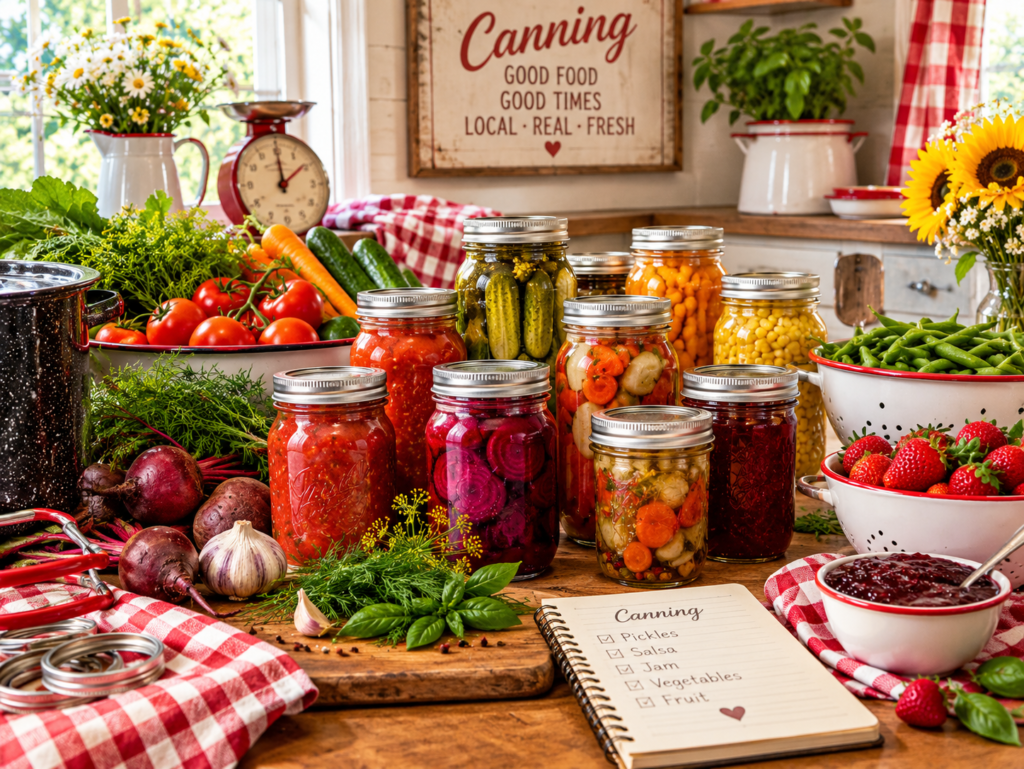
Let’s get canning!
If you’ve never canned before, don’t be intimidated. Start with one recipe, gather your supplies, and invite someone who has done it before.
Canning is a wonderful way to preserve seasonal produce, reduce waste, and stock your pantry.
Here are some simple ways to get started.
1. What you’ll need- Canning supplies
- Canning jars (Mason jars)
- New two-piece canning lids and bands
- A large boiling-water canner with a rack, for tested water-bath recipes
- A pressure canner for low-acid vegetables
- Jar lifter
- Canning funnel
- Clean kitchen towels
- Large pot and utensils
- Fresh, good-quality produce
- A tested canning recipe
Always check jars for cracks or chips and use the correct equipment for the food you’re preserving.
2. Preparing your jars
- Wash jars in hot, soapy water and rinse well.
- Keep jars hot until ready to fill.
- Prepare lids according to the manufacturer’s instructions.
- Wash and prepare your produce.
- Follow the tested recipe for cutting, packing, liquid, and processing time.
3. Filling your jars
- Place prepared food into the jars as directed by your recipe.
- Add the specified liquid, such as water, brine, or syrup.
- Follow the recipe’s required headspace (the space between the food and the lid).
- Remove trapped air bubbles when instructed.
- Wipe the jar rims clean.
- Apply lids and bands according to the manufacturer’s directions.
4. Processing your jars
This is the important part!
Not every food can be preserved using the same method.
- High-acid foods, such as properly acidified pickles, fruit, jams, and tomatoes prepared according to tested recipes, may be processed in a boiling-water canner.
- Low-acid foods, including plain green beans, carrots, corn, peas, and most vegetables, require a pressure canner.
- Never use an ordinary boiling-water bath to can low-acid vegetables.
- Adjust processing for your altitude, jar size, and recipe.
When the processing time is complete, carefully remove the jars and allow them to cool undisturbed for 12–24 hours. Check the seals, label, and date your jars. Refrigerate any jars that fail to seal.
Always use a tested recipe from a reliable food-preservation authority. Do not shorten processing times or improvise ingredient ratios.
Sugar-free and low-sugar canning: You have options!
One of the things I love about preserving food at home is that we can decide what goes into our jars.
If you’re trying to reduce refined sugar, there are some wonderful ways to preserve fruit and vegetables without adding loads of sweetness.
And here’s something many people don’t realize:
Sugar is not always necessary for safe canning.
In many fruit-canning recipes, sugar is primarily there for sweetness, colour, and texture rather than food safety. National Center for Home Food Preservation+1
1. Sugar-free canned fruit
No added sugar option
You can preserve many fruits without adding sugar syrup.
Try:
- Peaches
- Pears
- Apples
- Cherries
- Blueberries
- Strawberries
Instead of a sugary syrup, use:
- Plain water
- Unsweetened apple juice
- Unsweetened grape juice
- The fruit’s own juice, where a tested recipe allows it
How to do it:
- Wash and prepare your fruit.
- Peel and slice fruit when required by your recipe.
- Prevent browning using the recommended preparation method.
- Pack into jars using the raw-pack or hot-pack method specified in your tested recipe.
- Cover with boiling water or the permitted unsweetened juice.
- Leave the required headspace.
- Remove air bubbles, wipe rims, and apply lids.
- Process using the tested time and method for that particular fruit.
You still need the proper processing time. Simply removing the sugar from a traditional preserve recipe does not automatically make it safe.
2. Sugar-free jams and fruit spreads
Les bienfaits insoupçonnés des confitures de fruits rouges | Le Songe du Verger
Who says jam needs cups and cups of sugar?
You can make fruit spreads with:
- No-sugar-needed pectin
- Naturally sweet ripe fruit
- Chia seeds for refrigerated or frozen fruit spreads
- A little lemon juice when appropriate for the recipe
Important: Use a tested recipe specifically designed for no-sugar-added pectin. Regular pectin recipes cannot simply have their sugar removed.
For a completely simple option, make a small batch of mashed berry and chia-seed spread and keep it refrigerated or frozen rather than treating it as shelf-stable canned jam. National Center for Home Food Preservation+1
3. Sugar-free pickles
Traditional pickles often contain sugar, but sugar isn’t what makes a properly formulated pickle safe.
You can make dill pickles without added sugar!
Basic ingredients include:
- Fresh pickling cucumbers
- Vinegar with 5% acidity
- Water
- Pickling salt
- Fresh dill
- Garlic
- Peppercorns
Use a tested dill-pickle recipe and follow its exact vinegar-to-water ratio, jar size, and processing time. Never dilute the vinegar or change the proportions to suit your taste.
For a sugar-free pickle, simply choose a tested recipe that doesn’t call for sugar.
4. Sugar-free vegetables
Да мариноваме лятото в буркани | vkusotii.dir.bg
Vegetables are wonderful pantry staples.
Think:
- Carrots
- Green beans
- Beets
- Corn
- Peas
- Pumpkin and winter squash, where tested instructions are available
Most plain vegetables are low-acid foods and MUST be pressure canned using tested instructions.
You can generally leave out salt in tested vegetable-canning recipes because salt is not required for preservation. CDC+1
A few old-fashioned recipes worth bringing back
Canned Pickled Beets (Recipe + Video) – Wyse Guide
Canning Fruit : 10 Steps (with Pictures) – Instructables
10 Mistakes Everyone Makes When Making Pickles
Here are some ideas for your next canning afternoon:
| What to preserve | Sugar-free possibility |
|---|---|
| Pickled beets | Tested vinegar recipe without sugar |
| Peaches | Water or unsweetened juice |
| Applesauce | Apples and cinnamon |
| Dill pickles | Garlic, dill and vinegar |
| Tomato sauce | Tomatoes and herbs, using a tested recipe |
| Berry spread | No-sugar-needed pectin |
| Green beans | Pressure canned without added salt |
A little reminder: sugar-free doesn’t mean shortcut-free. Acidity, pressure, temperature, jar size and processing time all matter.
A very important note about food safety
I want everyone to enjoy this old-fashioned tradition safely!
Botulism is a serious risk when low-acid foods are improperly canned. Please follow these rules:
- Never water-bath can plain vegetables.
- Never substitute an ordinary pressure cooker or multicooker for a tested pressure canner.
- Never guess processing times.
- Use tested recipes and adjust for your altitude.
- Never taste food from a jar that shows signs of spoilage, a failed seal, leakage or unusual appearance.
The National Center for Home Food Preservation has excellent instructions and tested recipes: Home Canning Guides. The CDC also provides Home-canning safety information. CDC+2
It’s about so much more than food
Here’s what I really want to get across.
Taking action doesn’t have to mean doing something huge.
It can mean:
- Planting a garden.
- Buying from your local farmers.
- Learning to make something from scratch.
- Preserving food for winter.
- Teaching your children how to cook.
- Sharing your harvest with someone who needs it.
- Inviting friends over instead of spending another evening staring at a screen.
- Building relationships with people who value the same things.
We can spend our days talking about how much things have changed, or we can start creating the kind of life we wish we still had.
I choose the latter.
I want more conversations around kitchen tables. More homegrown food. More shared meals. More laughter. More community. More people willing to learn, teach, help and encourage one another.
I want to know where my food comes from. I want to support the people growing it. I want to be intentional about what I put into my body and what I bring into my home.
And most importantly, I want to spend my time doing things that matter.
There is something beautiful about slowing down, appreciating what God has provided, and being good stewards of what we have.
Maybe the good old days aren’t something we need to go back to. Maybe they’re something we need to start creating again.
So get those jars out. Call a friend. Find some fresh local produce. Put on some music, make a mess in the kitchen, laugh a little, and fill your pantry.
Stop wishing.
Start doing.
One jar, one garden, one friendship, and one good old-fashioned afternoon at a time.
And remember…
The best time to start building the life you want is today.
With love,
Claire Rae
Keep food real. Keep community strong. Keep taking action.
