
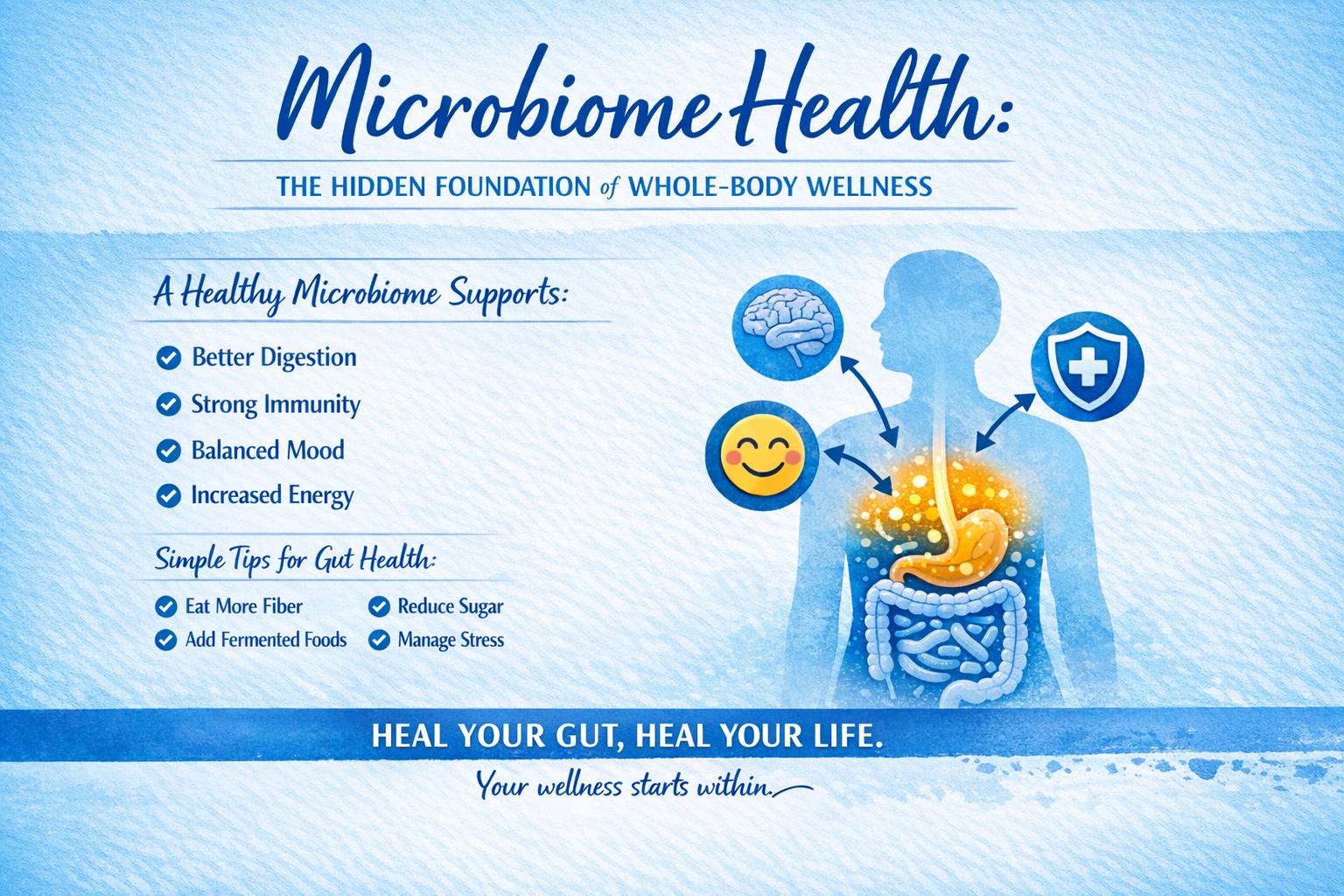
Microbiome Health: The Hidden Foundation of Whole-Body Wellness
Inside your body lives an entire ecosystem—trillions of bacteria, fungi, and microorganisms working together to support your health. This community is called the microbiome, and it plays a much bigger role in your wellbeing than most people realize. From digestion and immunity to mood, hormones, and even weight regulation, your microbiome is quietly influencing almost every system in your body.
When your microbiome is balanced and diverse, your body thrives. When it’s disrupted, symptoms can show up in unexpected ways.
What Exactly Is the Microbiome?
The microbiome refers primarily to the microorganisms living in your gut, though similar communities exist on your skin, in your mouth, and throughout your body. In the gut, these microbes help:
-
Break down complex carbohydrates and fiber
-
Produce essential vitamins such as vitamin K and certain B vitamins
-
Support immune system development and regulation
-
Protect against harmful pathogens
-
Regulate inflammation and metabolic processes
Research shows that the gut microbiome functions almost like an additional organ due to its extensive metabolic and immune activity (Lederberg & McCray, 2001; Thursby & Juge, 2017).
Signs Your Microbiome May Be Out of Balance
A disrupted microbiome—often referred to as dysbiosis—can be influenced by antibiotics, chronic stress, poor diet, sleep disruption, and environmental toxins. Studies link dysbiosis to symptoms such as:
-
Digestive issues (bloating, constipation, diarrhea)
-
Increased inflammation
-
Insulin resistance and metabolic imbalance
-
Mood disorders and cognitive symptoms
Dysbiosis has been associated with conditions including IBS, obesity, autoimmune disease, anxiety, and depression (Valdes et al., 2018).
The Gut–Brain Connection
One of the most fascinating discoveries in modern health science is the gut–brain axis—the bidirectional communication between the gut microbiome and the central nervous system.
Gut bacteria influence neurotransmitter production, including serotonin, dopamine, and GABA. Approximately 90% of serotonin is produced in the gut, not the brain (Yano et al., 2015). Healthy gut bacteria help regulate stress responses, mood, sleep, and emotional resilience.
This connection explains why improving gut health is often associated with improvements in anxiety, depression, and overall mental clarity (Cryan & Dinan, 2012).
How Modern Life Impacts Gut Health
Research shows that modern lifestyle factors significantly alter gut microbiome diversity:
-
Diets high in ultra-processed foods reduce beneficial bacteria
-
Excess sugar promotes inflammatory microbes
-
Antibiotics reduce microbial diversity, sometimes long-term
-
Chronic stress alters gut permeability and bacterial balance
Low microbial diversity has been consistently associated with poorer health outcomes and increased disease risk (Mosca et al., 2016).
How to Support a Healthy Microbiome Naturally
Evidence-based lifestyle habits can restore and support gut health:
1. Eat a Fiber-Rich Diet
Dietary fiber acts as a prebiotic, feeding beneficial bacteria. High-fiber diets are linked to increased microbial diversity and reduced inflammation (Makki et al., 2018).
2. Include Fermented Foods
Fermented foods like yogurt, kefir, sauerkraut, and kimchi introduce live microorganisms that can improve gut microbial composition and immune response (Marco et al., 2017).
3. Reduce Sugar and Ultra-Processed Foods
High sugar intake has been shown to disrupt gut bacteria and increase inflammatory markers (Zinöcker & Lindseth, 2018).
4. Manage Stress
Stress alters gut motility and microbial balance via the gut–brain axis. Mindfulness, prayer, breathing practices, and nature exposure have all been shown to positively influence gut health (Foster et al., 2017).
5. Prioritize Sleep
Circadian rhythm disruption negatively affects gut microbiota composition and metabolic health (Voigt et al., 2014).
6. Be Intentional with Antibiotic Recovery
While antibiotics are sometimes necessary, studies suggest targeted probiotic and dietary support can help restore microbial balance afterward (McFarland, 2014).
Healing from the Inside Out
Modern science continues to confirm what holistic health has long emphasized reminding us: true wellness begins in the gut. Supporting your microbiome doesn’t just improve digestion—it strengthens immunity, stabilizes mood, reduces inflammation, and supports long-term vitality.
When you nourish your internal ecosystem, you create an environment where healing becomes possible—naturally and sustainably.
Scientific References
Cryan, J. F., & Dinan, T. G. (2012). Mind-altering microorganisms: The impact of the gut microbiota on brain and behaviour. Nature Reviews Neuroscience.
Foster, J. A., et al. (2017). Stress & the gut-brain axis. Neurobiology of Stress.
Lederberg, J., & McCray, A. T. (2001). ‘Ome sweet ’omics—a genealogical treasury of words. The Scientist.
Makki, K., et al. (2018). The impact of dietary fiber on gut microbiota. Cell Host & Microbe.
Marco, M. L., et al. (2017). Health benefits of fermented foods. Nutrition Research Reviews.
McFarland, L. V. (2014). Use of probiotics to correct dysbiosis. Clinical Gastroenterology.
Mosca, A., et al. (2016). Gut microbiota diversity and human health. Current Opinion in Microbiology.
Thursby, E., & Juge, N. (2017). Introduction to the human gut microbiota. Biochemical Journal.
Valdes, A. M., et al. (2018). Role of the gut microbiota in nutrition and health. BMJ.
Voigt, R. M., et al. (2014). Circadian rhythm and the gut microbiome. International Review of Neurobiology.
Yano, J. M., et al. (2015). Indigenous bacteria from the gut microbiota regulate host serotonin biosynthesis. Cell.
Zinöcker, M. K., & Lindseth, I. A. (2018). The Western diet–microbiome-host interaction. Nutrients.
